Tracking: the technical detail that separates stores that sell from stores that stall

Caique DouradoGrowth / SEO Expert ·
You have already invested in traffic, adjusted the store layout, and improved the customer experience. Sales are still short of what you expected.
The problem may sit outside the design and outside the campaigns. The real cause may be the tracking on your e-commerce store.
Tracking is the system that collects and organizes data on customer behavior: where people come from, what they click, how long they stay, and the moment they leave the cart.
Without tracking set up properly, marketing decisions rest on guesswork. The result is inconsistent data, campaigns that waste spend, and a higher CAC.
How tracking hits your sales directly
Technical failures in data collection are more common than they look.
They distort the numbers, make reports hard to read, and hide the bottlenecks that matter.
A few warning signs:
- A gap between store data and Google Analytics;
- A rising cost of acquisition (CAC);
- Conversion falling even while traffic holds steady;
- Trouble seeing which campaigns actually produce results.
These “invisible” errors stall growth for a lot of Shopify stores. They usually go unnoticed.
Fixing tracking is simpler, and more strategic, than it looks
Adjusting tracking does not mean starting from zero. With the right setup of tags, events, and integrations, loose data becomes signals that actually move sales.
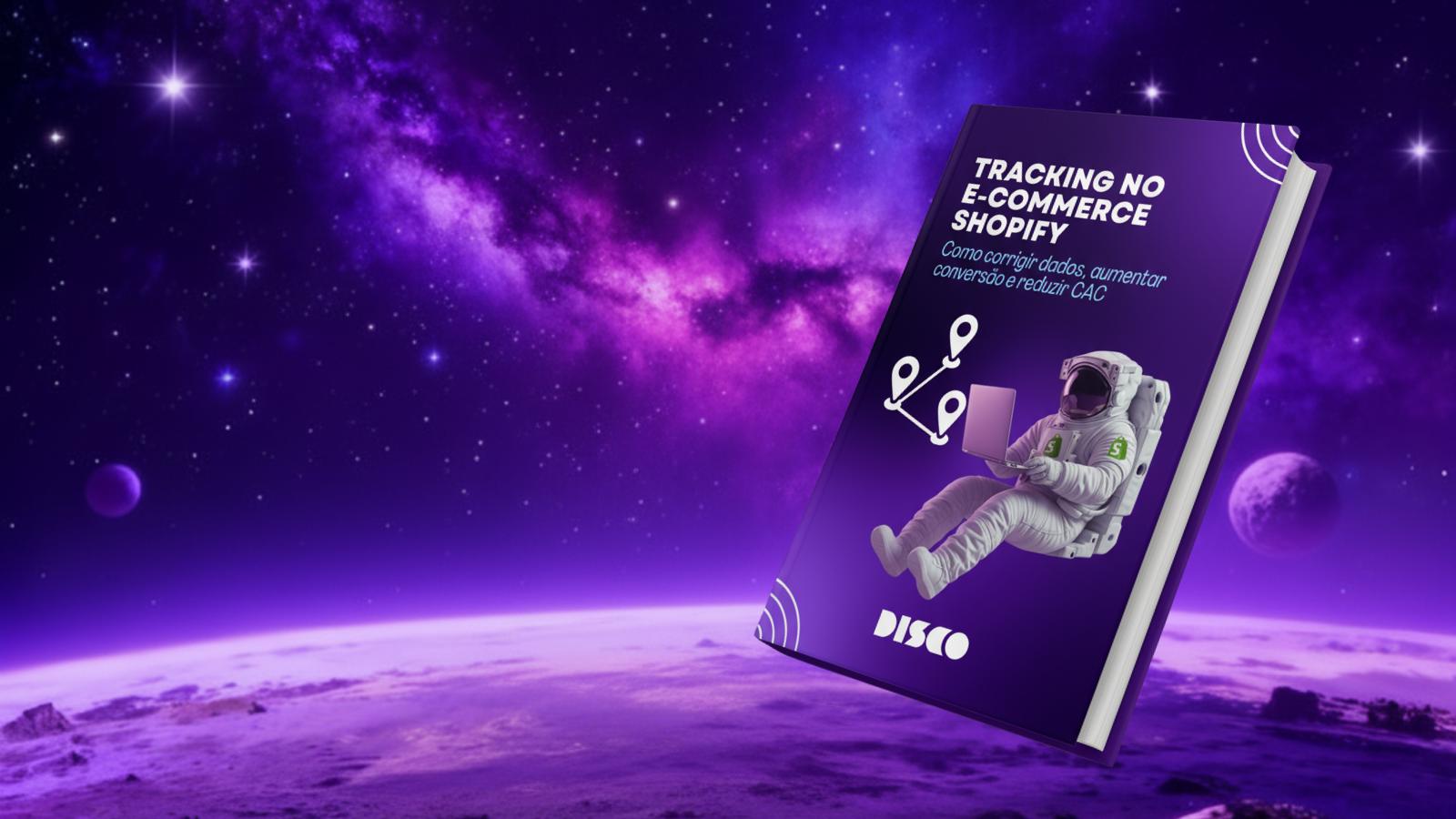
That is exactly what we explain in the free ebook “Tracking em Shopify”, a practical guide to fixing your data, raising conversion, and lowering CAC.
💡 Want to see where your tracking may be failing, and how to fix it with a clear plan?
👉 Download the ebook and see what separates e-commerce stores that merely run from the ones that actually grow.